

Are Portable Hardness Tester Accurate? Here’s What You Need to Know
When it comes to quality control, precision is non-negotiable. Whether you’re testing metals in a factory, performing on-site inspections, or verifying material hardness during maintenance, a portable hardness tester can be a game-changer. But one critical question often comes up — are portable hardness tester accurate?
Let’s explore the truth behind their accuracy and whether they can be trusted for professional applications.
What Is a Portable Hardness Tester?
A portable hardness tester is a handheld device used to measure the hardness of materials like metals, plastics, and alloys without the need for lab equipment. These testers commonly use methods such as:
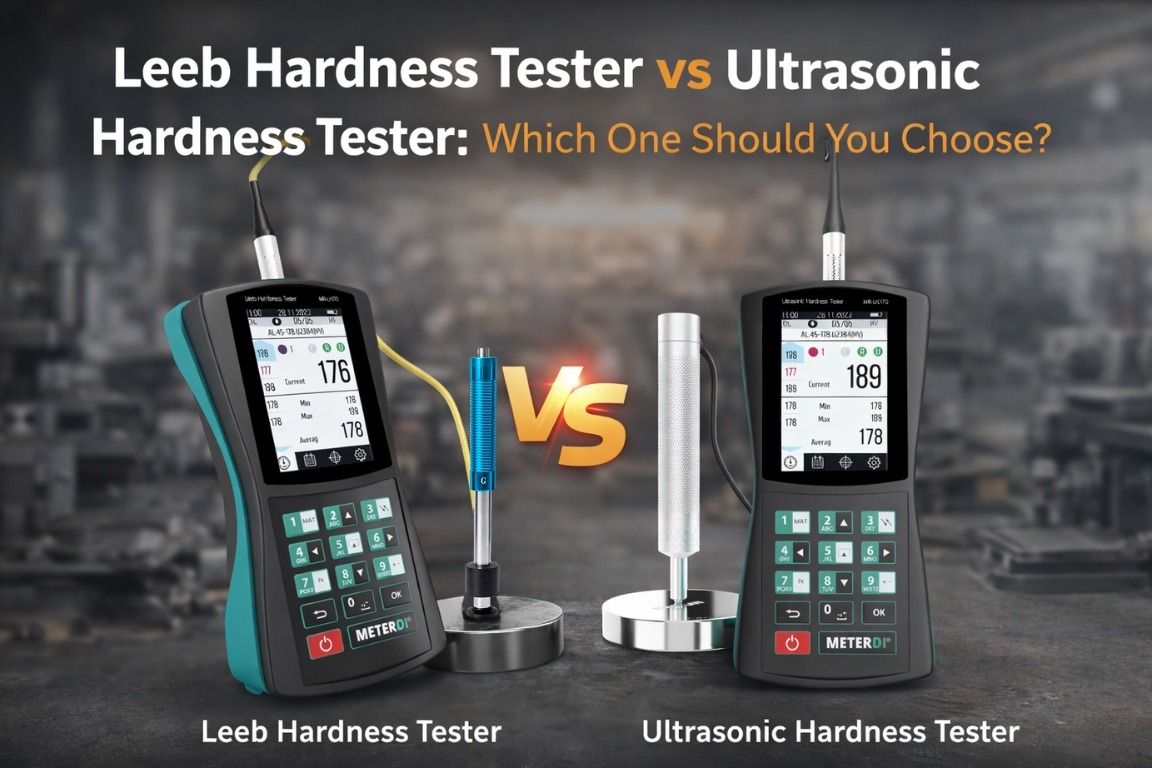
Leeb rebound (dynamic method)
UCI (Ultrasonic Contact Impedance)
Portable Rockwell (static method)
They are widely used in industries such as automotive, aerospace, manufacturing, and energy for non-destructive testing (NDT).
🔍 How Accurate Are Portable Hardness Testers?
1. Modern Portable Testers Deliver High Accuracy
Thanks to advancements in sensor technology, probe design, and digital calibration, modern portable hardness testers offer impressive accuracy—typically within ±3% of standard laboratory-based measurements. This level of precision makes them suitable for most industrial and field applications. However, accuracy can vary based on several factors, including:
Proper calibration using certified hardness reference blocks
Surface condition—a clean, smooth, and flat surface yields better results
Material structure and type—heterogeneous or coarse-grained materials may affect readings
Operator technique—correct probe placement and handling are crucial for consistency
2. Standard Compliance Matters
Many high-quality portable hardness testers are built to comply with international testing standards such as:
ASTM A956 – Leeb hardness testing
ASTM A1038 – UCI (Ultrasonic Contact Impedance) method
DIN 50156 – German standard for portable hardness testing
Devices that adhere to these standards undergo rigorous design and testing protocols, ensuring reliable, repeatable, and industry-accepted results. Choosing a tester with standard compliance significantly boosts measurement confidence, especially in regulated industries.
Factors That Affect Accuracy
While portable hardness testers are designed for precision, several factors can influence their accuracy if not properly managed. Improper contact or incorrect probe angle can lead to inconsistent results, especially on curved or uneven surfaces. An uncalibrated instrument may drift from true values over time, making regular calibration essential. Additionally, an inconsistent surface—such as one with rust, paint, or dirt—can interfere with the probe’s ability to measure accurately. Using the wrong material setting for the test can skew results, particularly if the material has unique structural properties. Also, a thin or unstable sample, especially when using the Leeb method, may not provide enough mass or stability to absorb the impact correctly. Even the most advanced testers can yield inaccurate readings if these conditions are not properly controlled.
Improper contact or probe angle
Uncalibrated instrument
Inconsistent surface (rust, paint, dirt)
Wrong material setting
Thin or unstable sample (especially in Leeb method)
Even the most advanced tester can give poor results if not handled correctly.
Lab Testers vs. Portable Testers
| Feature | Portable Tester | Lab-based Tester |
|---|---|---|
| Accuracy Range | ±3% to ±5% | ±1% |
| Portability | High | Low |
| Application | On-site, in-field | Controlled environment |
| Price | Lower | Higher |
| Material Limitations | Some | Very few |
So, while lab machines may still hold a slight edge in precision, portable testers are incredibly accurate for most industrial applications.
🧠 Expert Tip: Calibration Is Key
To maintain accuracy:
Calibrate the tester before each use
Use certified hardness reference blocks
Follow manufacturer guidelines
This ensures your device gives repeatable and reliable readings over time.
🔚 Final Verdict: Can You Trust Portable Hardness Testers?
Yes, you can. When used correctly and regularly calibrated, portable hardness testers provide accuracy that is sufficient for most real-world applications. They bring unmatched flexibility, save time, and are perfect for in-field inspections where lab testing isn’t practical.
Hardness Tester Manufacturers in India
When it comes to reliable hardness tester manufacturers in India, METERDI Instruments India Pvt. Ltd. stands out as a trusted name in the industry. Based in Dhanbad, Jharkhand, METERDI designs and delivers advanced portable hardness testers tailored for industrial applications. The company focuses on precision, durability, and ease of use, offering models that utilize Leeb, UCI, and combined testing methods. Each tester is built to meet international standards like ASTM and DIN, ensuring consistent and repeatable results across various materials. METERDI’s commitment to innovation, quality control, and customer support has quickly earned it a reputation as a rising leader in India’s test and measurement equipment sector.
Need a reliable portable hardness tester?
METERDI’s latest models like the MR-HD700 or MR-LH70 — engineered for accuracy, durability, and convenience in every inspection. 👉 Explore our full range of Portable Hardness Testers engineered for accuracy and performance across all industries.